Tag Archives: Florida

Pinehurst and San Sebastian Cemeteries-Saint Augustine, Florida

San Sebastian and Pinehurst Cemeteries are located in West St. Augustine on Pearl Street. The two cemeteries are next to each other and are stated to be among the oldest Black cemeteries in the state of Florida. There is conflicting information on whether the cemeteries began before or after the Civil War.

The cemeteries contain a mixture of commercial and vernacular headstones, along with military ones. Additionally, there are mementos left on many graves. Everything from conch shells to dolls is scattered throughout.

Mr. James Jones Remembrance of his daughter Elizabith. Aslapp.
Edwin Mansell (1947-1999). This is one of the newer vernacular headstones I’ve seen. It uses tile which is a common material in handmade markers.
I do not know what this stands for.
Bessie R. James, 1883-1913
Lewis Mickell, 1872-1915
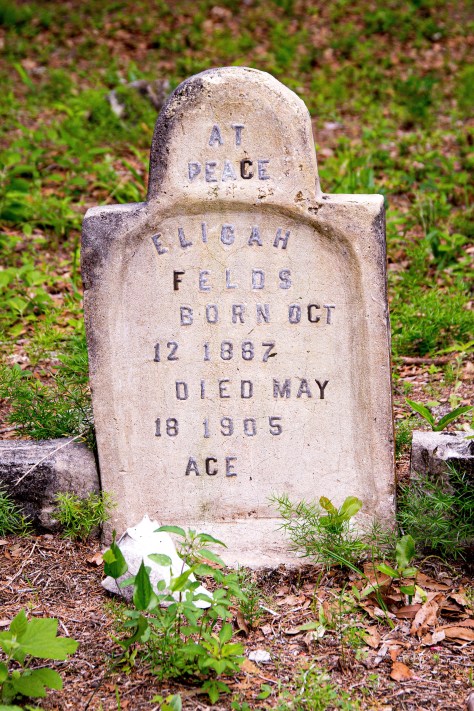
Elisah Felds, 1887-1905
The name is hard to read, but the Masonic symbol is still visible.
Ellen Simmons, d. 1910. This marker resembles an Angel.
One of the many concrete crosses in the cemetery.
Victorian grave markers heavily influence this marker.

There is no truth that carved chains on a headstone mean someone is born into slavery. Most chains represent the fraternal organization Fraternal Order of the Independent Order of the Odd Fellows. They are frequently joined with the letters “ F L T,” which stands for “Friendship, Love, Truth.”

I read several journal articles about the documentation of slave and Black cemeteries, and there was no mention that markers with chains meant someone was born into slavery. What is consistently mentioned are broken dish ware, clocks, shells, and different plants.

A circle of chains, broken or unbroken, can represent death or hope respectively.

Willie Whitted, 1879-1917. This is one of several Odd Fellows markers in the cemeteries. This person was born after the end of slavery.

This cemetery shared two borders with the all-white cemetery, Evergreen Cemetery.

Craddock Mausoleum at Sunset Memorial Cemetery-Jacksonville, Florida

I love this mausoleum. This Art Moderne mausoleum belongs to the Craddock family, a once prominent Black family in Jacksonville, Florida. James “Charlie Edd” Craddock ran several nightclubs in the area. The Two Spot was dubbed in the NAACP magazine as “the finest dance place in the country owned by a Negro”. He also had several other business ventures that made him incredibly successful.

He is buried in what once was a prominent Black cemetery that will be restored.

Memorial Cemetery-Jacksonville, Florida

Established by a Leo Benedict, a local businessman, in 1909, Memorial Cemetery is one of several Black cemeteries on Moncrief Road in Jacksonville, Florida. By 1911, the cemetery was run by the Memorial Cemetery Association.

Vernacular marker

The association utilized the Afro-American Life Insurance Company to manage the day to day operations of the cemetery. Abraham Lincoln Lewis served as the president of the company. When it disbanded, the Lewis family continued to manage the cemetery. They managed it until the 1980s when the family turned to a non-profit to run the cemetery. It disbanded and now the city of Jacksonville runs it.

Alice Anderson, 1876-1930, G. U. O. Of O. F. is the abbreviation for Grand United Order of Odd Fellows. Alice was a Most Worthy Grand Superior for the Household of Ruth.
Back of Alice Anderson’s marker

Abraham Lincoln Lewis Mausoleum-Jacksonville, Florida

Abraham Lincoln Lewis (1865-1947) was the first Black millionaire in Florida. He started the Afro-American Life Insurance Company in Jacksonville, Florida. In addition to several other businesses he owned, he bought acres of beachfront to create a vacation spot known as American Beach. It became a safe haven for Black Americans to vacation during segregation.

The Art Deco style mausoleum was designed by Leeroy Sheftall and is located in Memorial Cemetery.

It was listed on the National Register of Historic palaces in 1997.

United States Colored Troops

There are many articles who do a much better job explaining the importance of the United States Colored Infantry and who made up the troops. The troops were made up freed men from the North and South. For Southern ones, many volunteered to fight after a Southern city was under control of Union troops. They played an important role in defeating the Confederacy.

Suggested articles:

BlackPast

Henry Ford Foundation

Atlanta History Center

Drayton Cemetery, Hilton Head Island
Ansel Drayton, 1825-1898
James Drayton
Samuel Sancho Christopher, 1843-1914
Adam Jankins, 1842-1910
Talbird Cemetery, Hilton Head Island
Corporal Wooding “Worden” White, 1836-1912
Edward Seabrook or Ladson, at some point there was a name change. Both Ladson and Seabrook are the last names of enslavers in the coastal area of South Carolina
David Williams
Jeremiah Holmes
Edward Lawyer, 1841-1911
San Sebastian Cemetery, Saint Augustine
William Sanders
Sampson Sanders

Liberty Hill Schoolhouse, Gainesville, Florida

Built in 1892, the Liberty Hill Schoolhouse was a one-room schoolhouse that replaced an original schoolhouse built in 1869. It operated until 1952 for the Black schoolchildren of the community of Rutledge. Rutledge, started during Reconstriction, was a planned community by formerly enslaved people.

It was put on the National Register of Historic places in 2003.