Heading south out of Prattville, Alabama, towards Montgomery is a dome-shaped building in the center of a parking lot. It’s the final vestige of Stuart’s Red Devil Lake, a recreation area built in the 1930s. It was billed as “Montgomery’s Finest and Most Unusual Recreation Center.” One unusual feature is the dome, which served as a fountain in the lake. Patrons could get free admission if they purchased Red Devil Gas, a series of gas stations owned by the lake owner. Unfortunately, a dam broke at Red Devil Lake in 1939, permanently closing the recreation area.
Advertisement in the June 16, 2024 Montgomery AdvertiserPhoto from the June 24, 1936 Montgomery Advertiser. You can see the dome on the left side of the photo. After the lake closed, a restaurant called the Water Wheel opened. Despite being abandoned, it still stands.A frequent advertisement in TheMongomery Advertiser
An island in the Alabama River hosts a tribe of friendly goats and a movie set for the film Big Fish. Not far from Montgomery, the town of Sceptre, Alabama, is actually Jackson Lake Island. In 2003, Tim directed the movie where part of the storyline take place in a magical town known as Sceptre, where the grass is so lush you don’t need shoes.
Gun Island Chute
The movie’s premise is that the father is known to tell tall tales, and on the day of his son’s birth, he lured the biggest fish with his wedding ring. This is just one of the tales he tells his son over the years. It stars Ewan McGregor, Helena Bonham Carter, Albert Finney, and other notable actors. The town of Sceptre stretches along Main Street with houses and commercial structures. Today, only a few of the houses remain. In 2023, one of the prop structures caught on fire after a lightning strike. A tornado in 2021 caused damage, too.
The island is privately owned by former Montgomery mayor and US Congressman Bobby Bright and his wife, retired judge Lynn Bright, and it has been in their family for years. The goats hadroamed the island for years before Big Fish came to town. Unfortunately, the trip of goats was lost to coyotes. The Brights decided to bring the goats back to the island. They are very used to humans. (One tried to climb into my car while I was packing my camera gear.) Unfortunately, in 2020, two baby goats disappeared, and it was believed that someone smuggled them off the island.
The original shoe line where people tossed their shoes since the grass is so lush you don’t need shoes. It is still a tradition today.
I highly recommend taking a trip to the island. There is a charge per person. If you are there for the day, the goats and the walk down Main Street would make a good day. Bring lunch, and you might have goat visitors. You can boat and fish in Gun Island Chute, the water surrounding the island. There is also RV Parking for overnight stays. I highly recommend visiting in the winter. The leafless trees add to the Southern Gothic appeal that is part of Big Fish. Fall would be a great time, too, because beautiful trees surround the lake.
Scroll down to see the original movie trailer.
Based on the front, I believe this might be a store and not a house.A view down Main Street towards the church.One of the other houses on the street. I assume it is the original color. It’s almost a haint blue.This is my favorite remaining house. I love the woodwork.Another houseI love this house, too. This is the house where the pie scene takes place.The beautiful church.One of paths around the island
If you’ve never seen the movie, it can be streamed. For those who have seen it, here is the original trailer; you can see the trees and the town featured here.
In the heart of Buckhead, there is an unassuming with an unexpected past. Built in 1924, the Ku Klux Klan built the three-story office building as their national headquarters. It served as their hub for producing and distributing their propaganda. Their infamous hoods, robes, and gloves were also made on the second floor. In fact, there used to be a sign on the building that said, “National Robe Manufacturers of the Knights of the Ku Klux Klan.” The third floor served as the KKK’s national office.
Due to the Great Depression, membership dwindled significantly, and headquarters were moved to Washington, DC. In 1939, the headquarters were moved back to Atlanta. Thankfully, the building ceased serving as the national headquarters when it was sold to be converted into apartments after World War II.
San Sebastian and Pinehurst Cemeteries are located in West St. Augustine on Pearl Street. The two cemeteries are next to each other and are stated to be among the oldest Black cemeteries in the state of Florida. There is conflicting information on whether the cemeteries began before or after the Civil War.
The cemeteries contain a mixture of commercial and vernacular headstones, along with military ones. Additionally, there are mementos left on many graves. Everything from conch shells to dolls is scattered throughout.
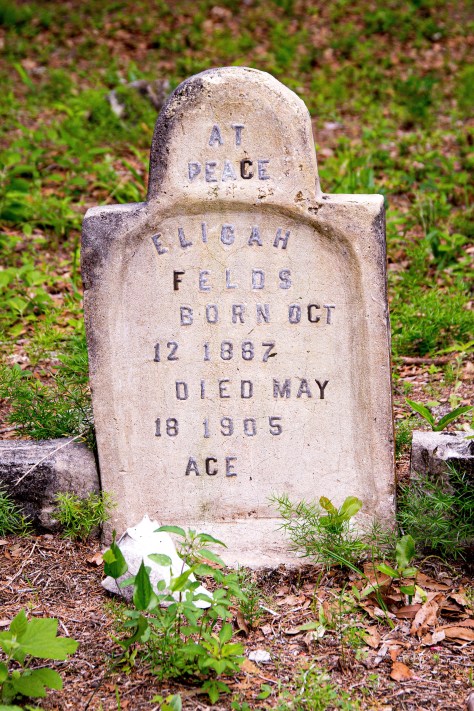
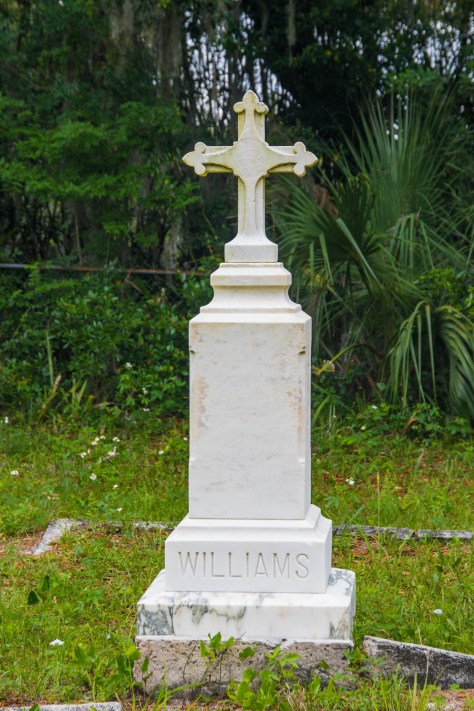
Mr. James Jones Remembrance of his daughter Elizabith. Aslapp. Edwin Mansell (1947-1999). This is one of the newer vernacular headstones I’ve seen. It uses tile which is a common material in handmade markers.I do not know what this stands for.Bessie R. James, 1883-1913Lewis Mickell, 1872-1915Elisah Felds, 1887-1905The name is hard to read, but the Masonic symbol is still visible.Ellen Simmons, d. 1910. This marker resembles an Angel.One of the many concrete crosses in the cemetery.Victorian grave markers heavily influence this marker.
There is no truth that carved chains on a headstone mean someone is born into slavery. Most chains represent the fraternal organization Fraternal Order of the Independent Order of the Odd Fellows. They are frequently joined with the letters “ F L T,” which stands for “Friendship, Love, Truth.”
I read several journal articles about the documentation of slave and Black cemeteries, and there was no mention that markers with chains meant someone was born into slavery. What is consistently mentioned are broken dish ware, clocks, shells, and different plants.
A circle of chains, broken or unbroken, can represent death or hope respectively.
Willie Whitted, 1879-1917. This is one of several Odd Fellows markers in the cemeteries. This person was born after the end of slavery.
This cemetery shared two borders with the all-white cemetery, Evergreen Cemetery.
Originally Tate High School, the Tate Elementary School building was constructed from locally quarried Georgia marble. The school was built in the early 1930s after the wooden structure burned to the ground in 1927. The current building is still standing. The footprint of the campus has expanded, but it is essentially unchanged.
(Photo from a Georgia Educational Report)High School that caught on fire and was replaced with with marble structure (photo from the Digital Library of Georgia)
Websites store cookies to enhance functionality and personalise your experience. You can manage your preferences, but blocking some cookies may impact site performance and services.
Essential cookies enable basic functions and are necessary for the proper function of the website.
Name
Description
Duration
Cookie Preferences
This cookie is used to store the user's cookie consent preferences.